Texts
Memories of Future
August, 2010
Exhibition Catalog for Leeum Museum of Art
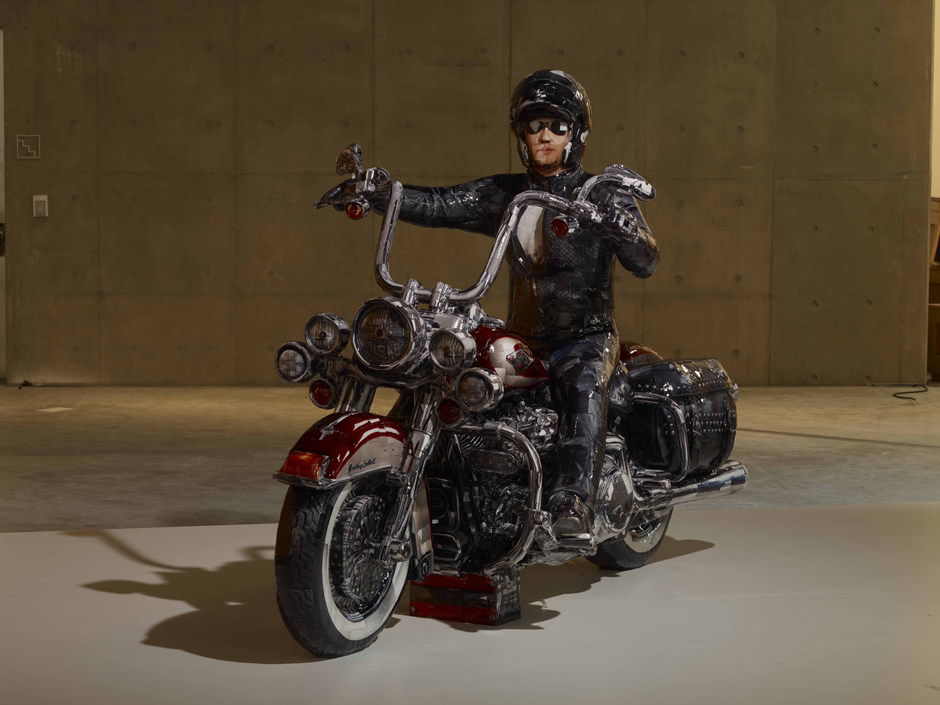
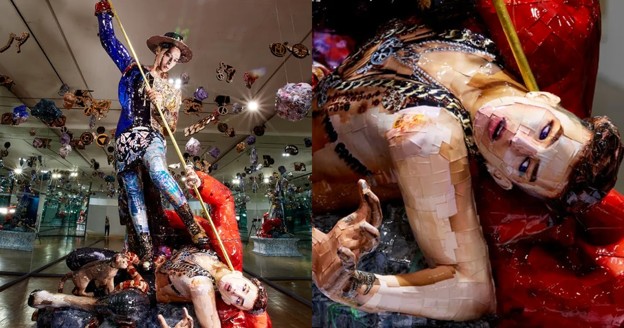
Milwaukee, 2010, C-print, Mixed media, 230 x 120 x 169 cm ©Artist
Photography is the easiest and most effective tool for capturing three-dimensional spaces in two-dimensional images. Thus, far more than painting or sculpture, its functional aspect of representing the reality as is has been greatly emphasized. Photographic images, however, constitute their own worlds that are different from the reality.
Furthermore, with the growing possibilities of computer-assisted manipulation and transformation in recent years, almost no one believes that photographs show the reality as is. Osang Gwon, who takes pictures of actual people and turning the pictures into three-dimensional objects, traverses the boundaries between photography and sculpture, 2-D and 3-D, illusion and reality, and readily occupies an unclear position in artistic genres.
The important keyword in understanding Gwon’s work can be found in his attitude toward sculpture. The point of departure for his work early on was a desire to make “light sculpture.” Unlike traditional sculpture made mainly with heavy materials like bronze and marble, Gwon’s sculpture consists of photographic prints and a light interior structure used to maintain the form. For this reason, his work has been called “photo-sculpture.”
Not only in terms of the method of making but also in terms of material, however, Gwon’s work is far from portrait sculpture or photographic portraiture. Although he is certainly deconstructing elements of traditional sculpture and attempting a hybridization of genres, Gwon voluntarily calls himself a sculptor. That his work originated from the foundation of sculpture even though it has moved toward causing internal fissures within the concept of traditional sculpture in a unique way serves as an important clue for understanding his art.
Gwon’s photo-sculpture began to be known in 2001 with his first solo exhibition titled 《Deodorant Type》. By giving his series this name—a kind of cosmetics that temporarily hides the smell of sweat—the artist metaphorically points toward the temporary optical trick of his work that confuses reality and illusory imagery. Already in early 1998, Gwon started creating three-dimensional objects by putting photographs together. His works at this time were of small, tabletop scales and also light and empty inside.
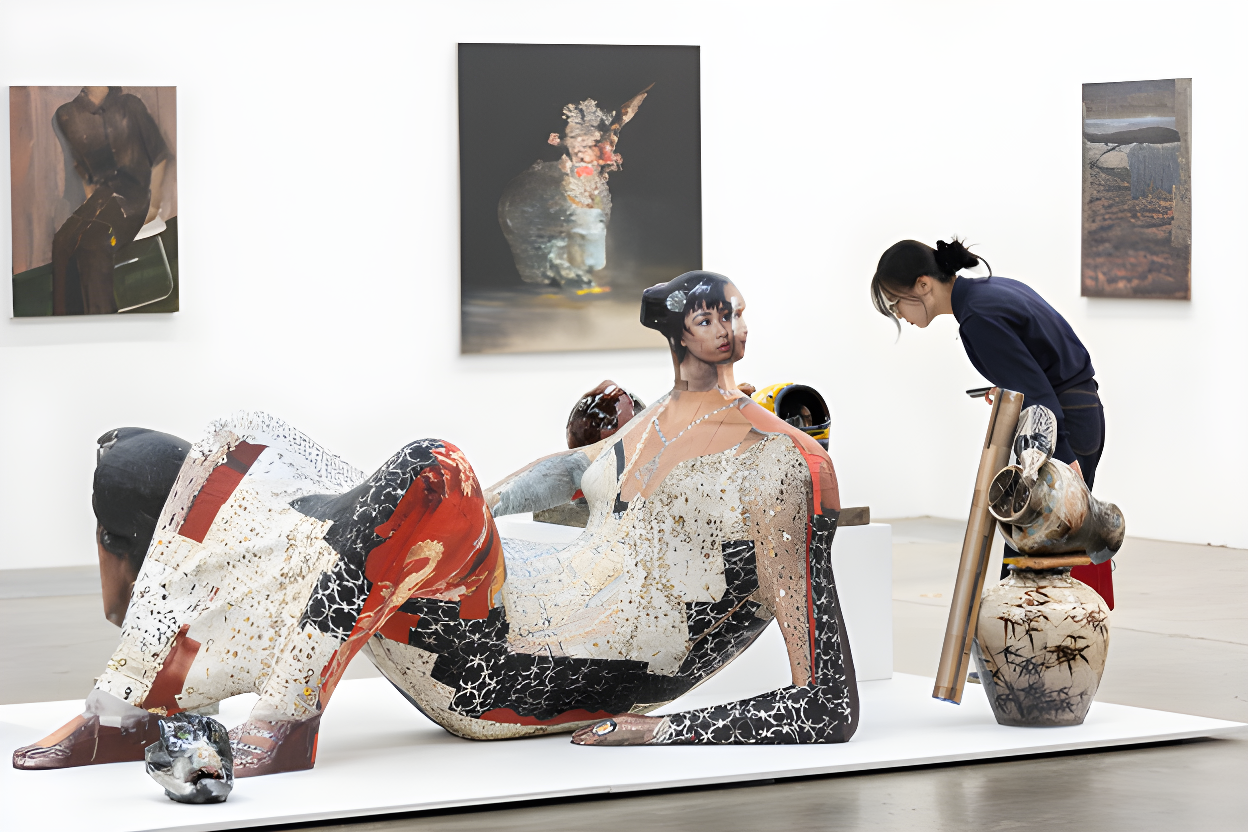
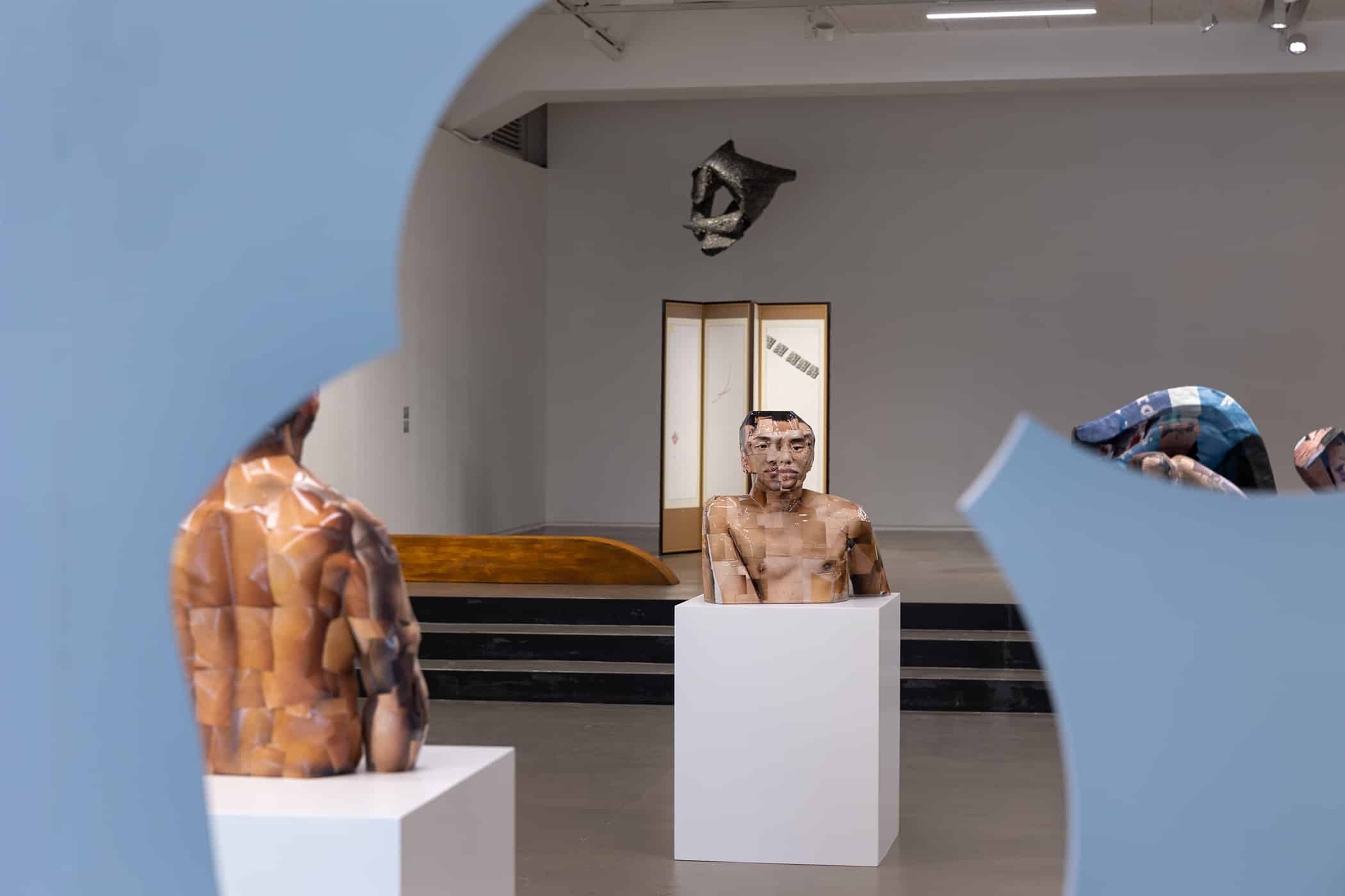
Since then, he added internal structures to make almost life-sized portraits whose exteriors consist entirely of photographic prints. He uses the unprecedented and unique method of taking hundreds of photos of all parts of his models and putting them together to form sculptures. Furthermore, by intentionally revealing gaps between the prints, Gwon’s work emphasizes the paradoxical fact that his sculptures are irregular composites of numerous images.
The artist has stated that he began the ‘Deodorant Type’ series while thinking about Auguste Rodin’s The Burghers of Calais. This is clearly instructive when we recall the fact that Rodin broke away from the conventions of monumental sculpture not only in his arrangement of figures but also by leaving visible in his sculpture the making processes such as the gas bubbles that occur during the casting.
Following ‘Deodorant Type’, Gwon embarked on ‘The Flat’ and ‘The Sculpture’ series. In the former, he cut out images of luxury watches, cosmetics, and jewelry from magazine pages, scanned them and arranged them densely standing up on the floor, and then rephotographed them. Through the complex processes of actual objects becoming photos, then three-dimensional objects, and again photos, the work reveals the artist’s consistent methodology of crossing between two dimensions and three dimensions.
In ‘The Sculpture’ series, Gwon sculpted cars in bronze or clay. Photography is not used at all in this series, and the movement of the artist’s hand is left on the clay molds like painterly touches. In other words, Gwon attempted to turn the exteriors of the sculptures into flat surfaces through painterly techniques. As evident in these examples, Gwon fluidly traverses the concepts of volume and surface, and his unpredictable materials and methodologies cause viewers to focus not on the meanings but the surfaces of his sculpture.
Gwon’s contribution in the present exhibition is an extension of ‘Deodorant Type’ and ‘The Sculpture’. His works are exhibited in unexpected locations in unconventional manners. On top of the Black Box gallery is a sculpture of a person standing on a bag precariously. Staring into space, the person seems about to fall down. The portrait sculptures inside the gallery are placed on low pedestals or directly on the floor. Viewers, freely walking amongst them, experience the sculptures that exist in the same temporal space as they themselves are rather than in a hermetic space alienated from the reality.
The most notable work is perhaps Milwaukee, which combines the artist’s interest in cars and motorcycles, which is evident in The Sculpture series, with his photosculptural portraiture. Other portrait sculptures assume a variety of poses, lying upside down, standing against a column, or simply standing. Strolling amongst them rather than looking at them from a distance, viewers can reinterpret and form new meanings by thinking about these sculptures vis-à-vis their personal experiences.
Furthermore, upon discovering the two-dimensional photos awkwardly put together to form the sculptures, they are obliged to think about the truth and fiction of imagery and even question, “what is sculpture?”
Writings
Criticisms
Unbound Assemblage: The Sculptural “-ic” Movements of Kwon Osang and Haneyl Choi
2022.08.23